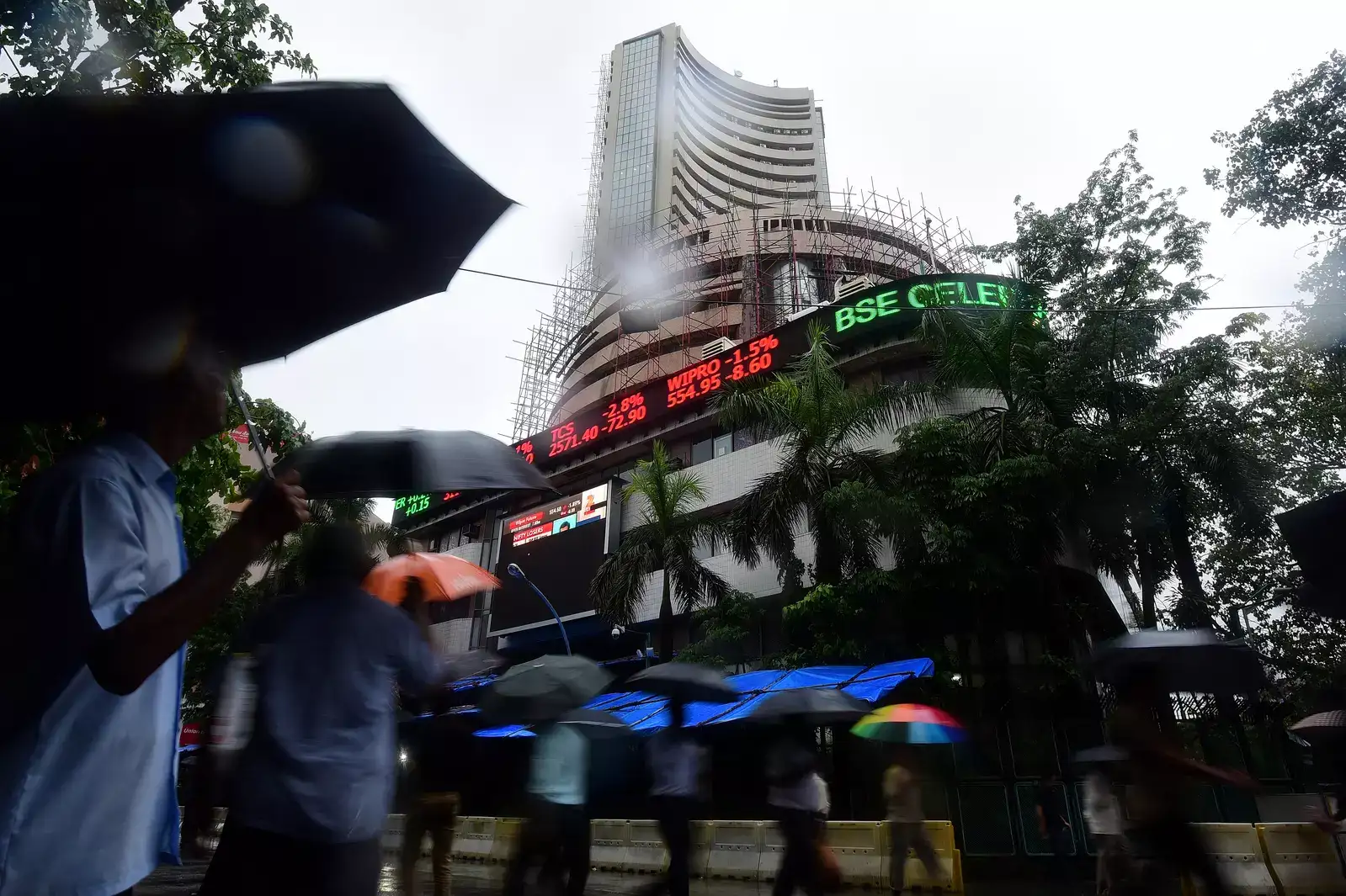

Global stock markets have remained surprisingly resilient despite a sharp rise in government bond yields, currency interventions, geopolitical conflicts, higher oil prices and growing concerns over the economic impact of artificial intelligence, Reuters reported.
The most widely tracked global equity indexes are now about 2% below their all-time highs and have gained more than 12% this year, adding roughly $3 trillion in market value during a volatile third quarter, Reuters reported.
Read more: Global Market: Kospi falls as oil prices, Middle East uncertainty weigh
The bigger source of concern for investors has instead been the global bond market, traditionally viewed as the stabilising component of diversified portfolios.
In the $29 trillion US Treasury market, which serves as a benchmark for pricing across global financial assets, the 10-year Treasury yield has climbed above 5%, reaching its highest level since the period immediately preceding the 2007-09 financial crisis, Reuters reported.
Government bond yields have also surged elsewhere. Japanese yields have reached multi-decade highs, while borrowing costs in Germany, France and Britain have climbed to levels not seen in 17 to 19 years. Because bond prices move inversely to yields, the sharp increase has translated into significant losses for fixed-income investors.
Read more: Global Market: Japanese bond yields rise as investors weigh inflation, rate-hike risks
Reuters reported that investors are increasingly concerned that the rise in yields represents a structural shift rather than another temporary spike. The concern is particularly pronounced because borrowing costs are rising even as equity markets remain close to record levels.
Stocks continue to ride earnings optimism
Equities, however, have shown signs of stress. South Korea's KOSPI, heavily influenced by chipmakers and the artificial-intelligence investment boom, has fallen almost 20%, marking its worst quarter since the COVID-19 pandemic.
The decline comes despite the index remaining roughly twice as high as it was a year ago, highlighting the strength of the broader technology-led rally.
Reuters reported that expectations for corporate earnings have remained a key support for global equities. S&P 500 earnings are expected to rise by at least 30% this year, reinforcing optimism that strong corporate profits can offset some of the pressure created by higher borrowing costs.
The scale of the earnings expansion has helped sustain investor appetite for equities despite increasingly challenging macroeconomic conditions.
Currency markets face renewed volatility
Currency markets have also experienced significant moves during the quarter.
One of the most important developments came in late July, when Japan and the United States coordinated an intervention to prevent a further slide in the yen, which had approached levels not seen in almost four decades.
The dollar has fallen about 3% against the yen during the quarter. However, the recent rise in US Treasury yields has supported the US currency against several other major currencies, including the Swiss franc, euro and Mexican peso, Reuters reported.
Other risk assets have also remained strong. Bitcoin has risen sharply, while oil prices have surged about 40% during the quarter and are now roughly 70% higher for the year.
Brent crude's quarterly increase is its second-largest since the second quarter of 2020, when oil markets were recovering from the unprecedented collapse triggered by the initial global COVID-19 lockdowns.
The bond-market selloff has not yet triggered the broad risk-off move that many investors had feared.
Even after financial markets in Turkey were shaken this month by a controversy involving an investment scheme a senior official described as resembling a Ponzi scheme, several large emerging markets have remained relatively resilient.
Reuters reported that investors are closely watching the dollar as a potential transmission mechanism for further stress. A stronger dollar could put additional pressure on emerging-market currencies and financial conditions if global bond yields continue climbing.
The final quarter of the year is expected to bring several additional risks for markets.
The wars in the Middle East and Ukraine continue to create uncertainty over energy prices, inflation and global economic growth. Investors are also watching interest-rate expectations as central banks contend with persistent inflationary pressures and higher borrowing costs.
Brazil's presidential election process is another key event for emerging markets, with the first round scheduled for the first weekend of October.
The US midterm elections in early November are likely to attract even greater attention. Reuters reported that polling suggests Republicans could lose control of the House of Representatives and potentially the Senate, adding another source of uncertainty for financial markets.
Bond yields and AI rally in focus
For investors, the key question heading into the final months of 2026 is whether elevated bond yields can remain contained without eventually undermining risk assets.
Equities' resilience has so far rested heavily on strong earnings expectations and enthusiasm around artificial intelligence. But a prolonged increase in borrowing costs could eventually raise the discount rate applied to future corporate earnings and put pressure on high-valued technology stocks.
Reuters reported that investors are therefore watching two interconnected developments: how much further benchmark government bond yields can rise and whether the AI-driven equity rally can withstand those higher financing costs.
For now, the global market picture remains unusual, with stocks near record highs even as the world's major bond markets undergo one of their most significant periods of stress in years.
(Disclaimer: This article is based on inputs from agencies. These do not represent the views of The Economic Times)